
AI Infrastructure Engineers: Role, Skills & Career Guide 2026
What AI infrastructure engineers do, the skills and tools they need, how the role differs from DevOps and MLOps, plus career paths and a practical FAQ.
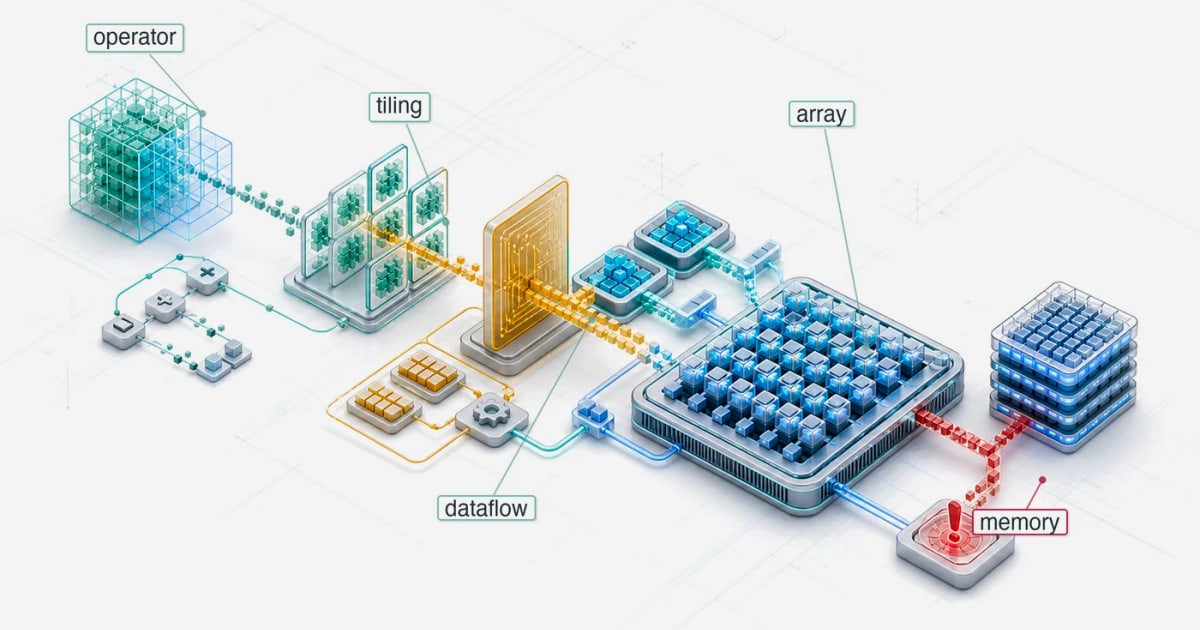
AI Infrastructure Engineers: Role, Skills & Career Guide 2026
AI infrastructure engineers build and operate the systems that let models train, serve, and improve without falling over. They sit between research teams that need fast iteration and platform teams that need reliability, cost control, and observability. As more companies move from prototypes to production AI, this role has shifted from a niche specialization to a core platform function.
This guide explains what AI infrastructure engineers actually do day to day, the skills that matter, how the role compares with DevOps and MLOps, and how to decide whether it is the right career move for you.
What AI infrastructure engineers do

AI Infrastructure Engineers: Role, Skills & Career Guide 2026 - What AI infrastructure engineers do.
The job is not about designing models. It is about making model workloads run reliably and efficiently at scale. Typical responsibilities include:
- Distributed training infrastructure. Setting up and maintaining multi-node training jobs, checkpointing, fault tolerance, and job recovery so long runs survive hardware failures.
- Inference and serving platforms. Building shared inference services with autoscaling, capacity management, health checks, and latency budgets.
- Compute scheduling and GPU utilization. Reducing idle GPU time through better queueing, bin-packing, preemption policies, and workload prioritization.
- Observability and tooling. Giving researchers self-service tools, automated validation, dashboards, and logs so they can launch experiments and diagnose failures without filing tickets.
- Data and storage plumbing. Moving large datasets and checkpoints efficiently between object storage, local NVMe, and training nodes.
A useful mental model: researchers ask "can the model learn this?" and AI infrastructure engineers ask "can we run this a hundred times, on schedule, at a predictable cost, and recover when something breaks?"
The AI infrastructure stack, layer by layer
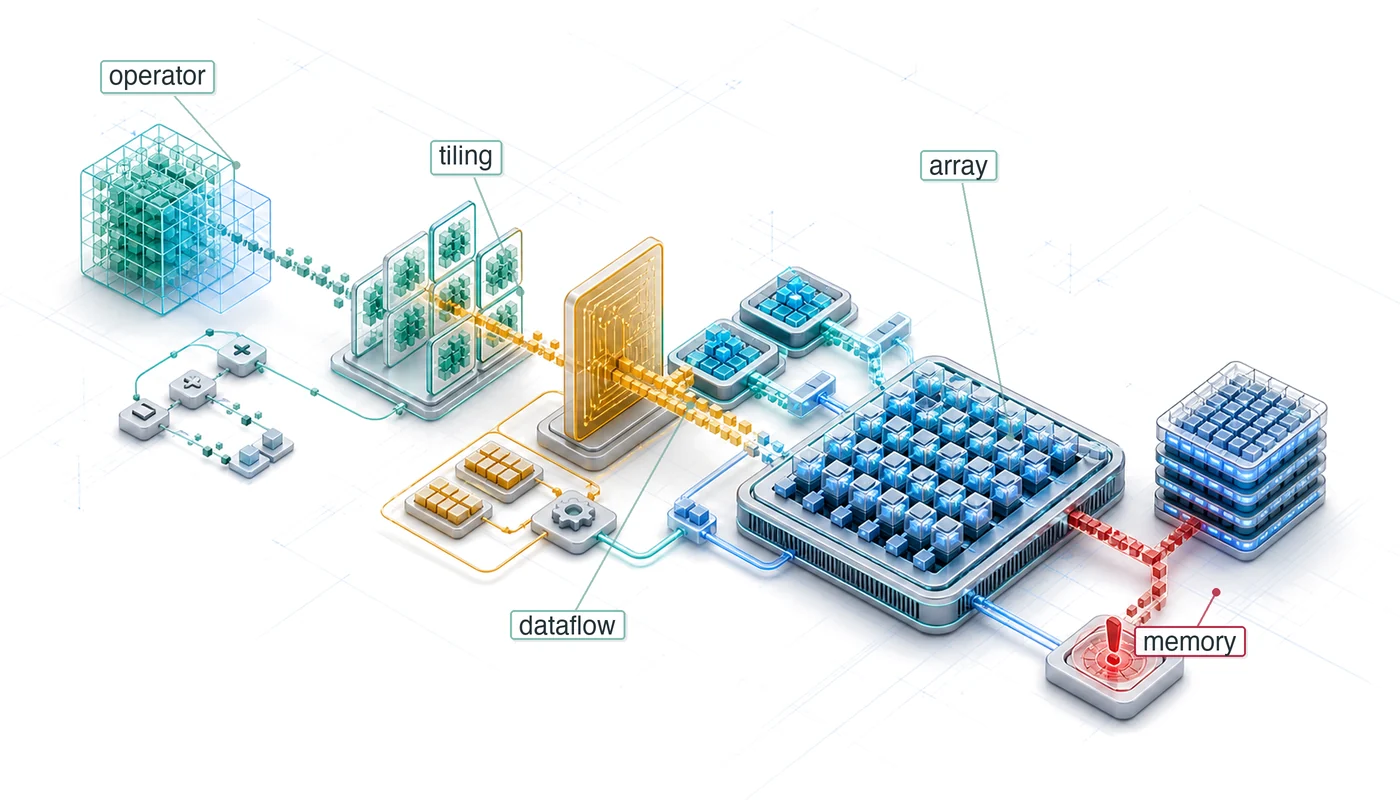
AI Infrastructure Engineers: Role, Skills & Career Guide 2026 - The AI infrastructure stack, layer by layer.
Most AI infrastructure work maps to three layers.
1. Hardware and compute layer
GPUs, high-bandwidth interconnects, fast local storage, and the cluster fabric that ties them together. Engineers here care about topology, NUMA effects, network bandwidth for collective operations, and how to isolate noisy neighbors.
2. Orchestration and platform layer
Kubernetes and similar schedulers, job queues, container images, model registries, and serving runtimes. This is where most AI infrastructure engineers spend their time: turning raw hardware into a dependable, multi-tenant platform.
3. Application and workflow layer
Training pipelines, evaluation and grading services, feature stores, and agent tooling. This layer is closest to the research and product teams, and it is where infrastructure decisions become visible as iteration speed.
Core skills and tools
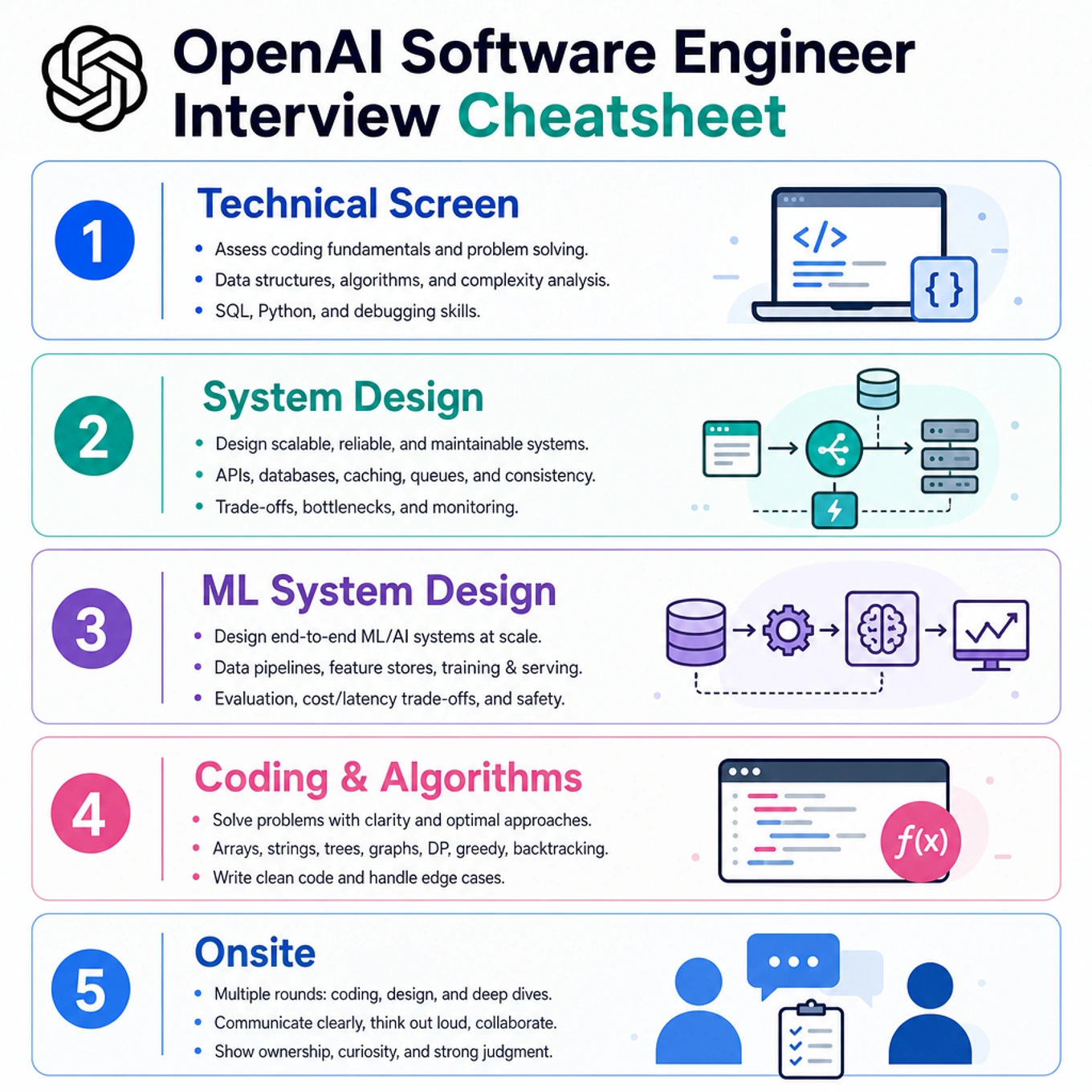
AI Infrastructure Engineers: Role, Skills & Career Guide 2026 - Core skills and tools.
| Skill area | What it looks like in practice |
|---|---|
| Distributed systems | Consensus, retries, idempotency, backpressure, failure domains |
| Kubernetes and scheduling | Custom schedulers, gang scheduling, resource quotas, node pools |
| GPU performance | Profiling, memory tuning, mixed precision, collective communication |
| Inference optimization | Batching, KV cache management, quantization, autoscaling policies |
| Observability | Metrics, traces, structured logs, alerting on SLOs |
| Software engineering | Strong Python and Go, testing, CI/CD, infrastructure as code |
| Data engineering | Streaming and batch pipelines, dataset versioning, storage tiering |
Inference serving frameworks such as vLLM and Kubernetes-native distributed inference frameworks have become common vocabulary in job descriptions and design reviews. You do not need to be a kernel-level expert, but you should understand how these systems use GPU memory and where they bottleneck.
AI infrastructure vs DevOps vs MLOps
These three roles overlap heavily, which is why the "should I specialize?" debate keeps resurfacing.
- DevOps / platform engineering focuses on general-purpose reliability: CI/CD, infrastructure as code, networking, and service operations. The skills transfer directly.
- MLOps focuses on the model lifecycle: experiment tracking, feature pipelines, model registries, deployment, and monitoring for drift.
- AI infrastructure engineering focuses on the compute-intensive substrate: distributed training, GPU scheduling, inference platforms, and the performance work that makes large workloads economically viable.
In practice, many teams hire one person who does all three. If you already work in DevOps, the move into AI infrastructure is usually an extension rather than a restart: you keep the systems fundamentals and add GPU, distributed training, and serving depth.
How AI infrastructure engineers work with AI agents and automation
A growing share of AI infrastructure work involves the data and tooling that agents and evaluation pipelines depend on. That includes collecting public web data at scale, validating that pages render correctly before extraction, and wrapping repeatable browser actions into stable internal APIs.
Teams that need rendered-page capture, HTML or Markdown extraction, and remote browser sessions often use a browser automation and data extraction API rather than maintaining their own headless Chrome fleet. AdsCrawl fits this pattern: it exposes real browser sessions, screenshots, and CDP control through a unified API, which is useful when an agent or monitoring job needs a page's rendered state rather than raw HTML. For a concrete pipeline example, see how to use AdsCrawl with DataForSEO, and for tool selection, the AdsCrawl vs Scrapfly vs Data Miner comparison covers browser control versus simpler scraping approaches.
This is infrastructure work in the classic sense: reliable, observable, and repeatable. It is also a good entry point for engineers who want to move toward AI platform roles without starting in distributed training.
Career paths and how to break in
There is no single credential. Hiring managers look for evidence that you can own an open-ended reliability or performance problem end to end.
- Start from an adjacent role. Backend, SRE, DevOps, or data engineering are the most common feeders. Pick up Kubernetes depth first.
- Build GPU and training literacy. Learn how distributed training jobs are launched, how checkpoints work, and how to read a profiler.
- Ship one serving system. Deploy a model behind an autoscaling endpoint, measure latency and cost, then optimize it.
- Practice debugging across boundaries. The best signal in interviews is a story about tracing a problem from a user-visible symptom down to a scheduler or network cause.
- Contribute in the open. Kubernetes operators, inference runtimes, and observability tooling all accept external contributions.
For broader context on the platform tooling that surrounds this work, the top website and infrastructure uptime monitoring tools roundup is a practical reference for the observability layer.
Is it too niche?
AI infrastructure is specialized, but it is not narrow. The underlying skills, distributed systems, scheduling, performance tuning, and reliability engineering, are the same ones that power search infrastructure, databases, and large-scale web platforms. If AI spending cools in one segment, these engineers remain employable in adjacent compute-heavy domains.
The real risk is different: staying at the level of "I can deploy a container" without developing depth in GPU efficiency, scheduling, or serving performance. Depth is what makes the role durable.
Related reading
- Top 10 E-commerce Market Data API Products 2026 - Compare the top 10 e-commerce market data API products for 2026 by data coverage, pricing, delivery, and fit for pricing, assortment, and marketplace intelligence.
- AdsCrawl vs Zenrows: Browser API or Scraping API? - AdsCrawl vs Zenrows compared: real CDP browser sessions, screenshots, and Markdown extraction versus Zenrows' anti-bot fetch and proxy stack.
Sources and further reading
- Is AI Infrastructure a Good Career Path or Too Niche? - Reddit - May 10, 2026 ... The DevOps vs AI Infra question is a false choice honestly. AI Infra IS DevOps, just more specialized. The skills transfer completely and the ...
FAQ
What does an AI infrastructure engineer do all day?
A mix of building and operating: writing platform code, tuning schedulers and serving configs, debugging failed training jobs, reviewing capacity plans, and building self-service tooling so research teams can move faster.
Do I need a machine learning degree?
Usually not. Strong software engineering and distributed systems experience matter more. Understanding how models train and serve is required, but you do not need to be the person designing the architecture.
Is AI infrastructure the same as MLOps?
No. MLOps centers on the model lifecycle and deployment workflows. AI infrastructure centers on the compute substrate: distributed training, GPU scheduling, and inference platform performance. Many teams combine both into one role.
Which programming languages should I learn?
Python is essential for tooling and integration. Go is common for schedulers, operators, and control-plane services. Shell and YAML fluency is assumed.
How do AI infrastructure engineers reduce GPU costs?
By improving utilization: better scheduling and bin-packing, preemption for low-priority jobs, right-sizing instance types, checkpointing to avoid wasted restarts, and serving optimizations such as batching and quantization.
What is the fastest way to get hands-on experience?
Run a small multi-node training job on a cloud GPU cluster, deploy a model behind an autoscaling endpoint, and instrument both with metrics. Then write up what broke and how you fixed it.
Conclusion
AI infrastructure engineers turn expensive, fragile compute into a dependable platform. The role rewards systems fundamentals, GPU and serving depth, and a willingness to debug across boundaries. If you come from DevOps, SRE, or backend engineering, you are closer to this career than you might think: add scheduling, training, and inference performance to what you already know, and you have a specialization that travels well beyond any single AI hype cycle.
For reference material on how AI infrastructure is described at the platform level, see Red Hat's overview of AI infrastructure, and for a real-world role description, OpenAI's AI Infrastructure Engineer posting.