
Top 10 Web Data Platform Products 2026: Ranked & Reviewed
Compare the top 10 web data platform products of 2026. We rank by proxy networks, scraping APIs, coverage, pricing, and compliance to help you choose.
Top 10 Web Data Platform Products 2026: Ranked & Reviewed
Web data platforms have become essential infrastructure for AI training, competitive intelligence, and real-time analytics. But with dozens of vendors claiming to offer "the best" solution, how do you separate genuine capability from marketing hype? This guide ranks the top 10 web data platform products of 2026 based on transparent criteria, real-world performance, and evidence from vendor documentation and independent benchmarks.
How We Evaluated
We assessed each platform across five dimensions:
- Proxy network scale & diversity: Number of IPs, geographic coverage, and IP type variety (residential, datacenter, mobile).
- Scraping API & extraction capabilities: Built-in rendering, CAPTCHA solving, structured data output, and success-based pricing.
- Coverage & compliance: Ability to access geo-restricted content, adherence to legal frameworks, and ethical data sourcing.
- Developer experience: Documentation quality, SDK availability, integration ease, and support for AI/LLM workflows.
- Pricing transparency & scalability: Cost per successful request, free tier limits, and enterprise-grade SLAs.
We prioritized platforms that offer end-to-end web data collection—from proxy infrastructure to ready-to-use datasets—rather than point solutions. For adjacent browser automation needs, tools like AdsCrawl can complement these platforms when you need full browser sessions or CDP control, but they are not ranked here as web data platforms.
1. Bright Data
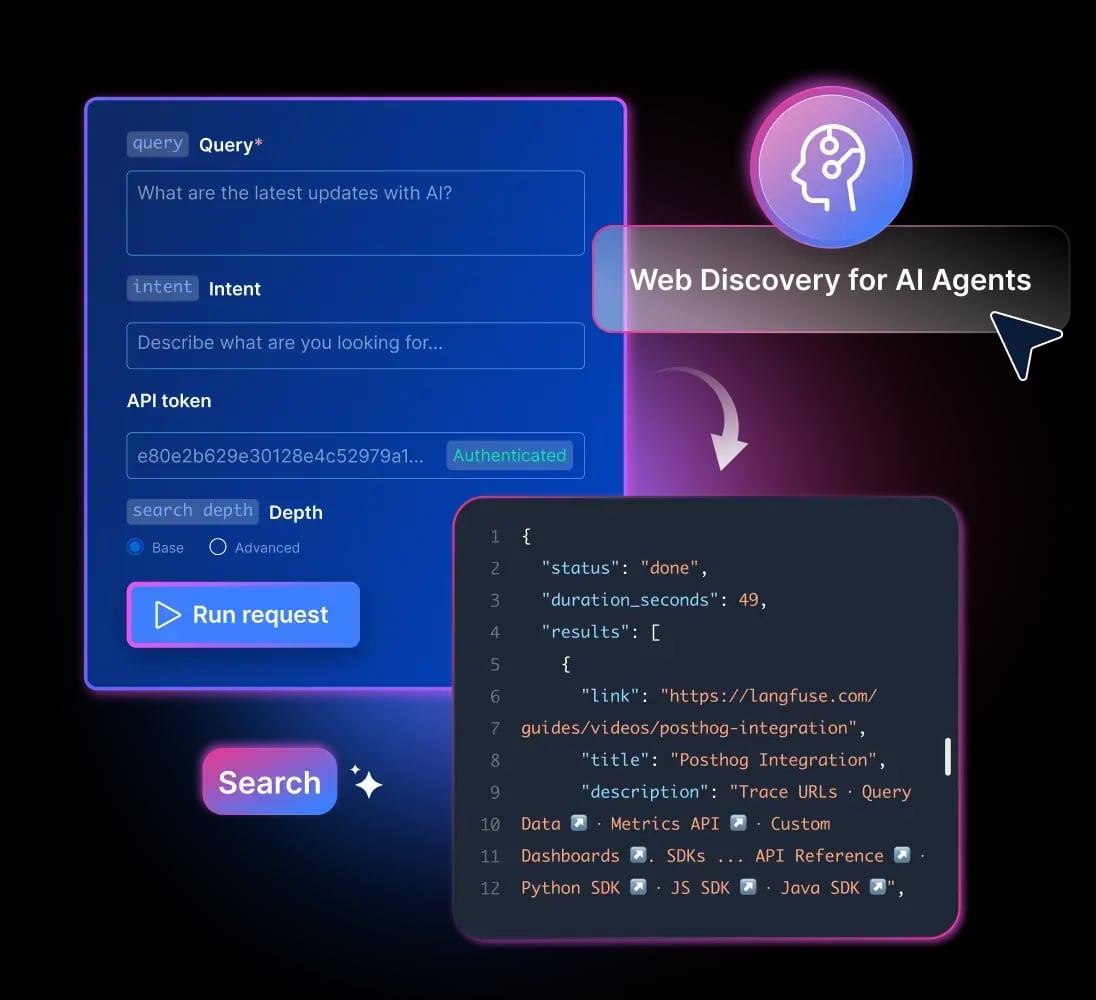
Bright Data product interface.
Best for: Enterprises and AI teams needing petabyte-scale public web data with guaranteed success.
Bright Data remains the undisputed leader in web data platforms. Its proxy network spans over 400 million IPs across 195 countries, and its Web Unlocker automatically handles CAPTCHAs, JavaScript rendering, and proxy rotation. The platform offers instant scraper APIs for major sites, AI-ready datasets, and SERP APIs for Google, Bing, and DuckDuckGo with geo-targeting. Pricing is pay-only-for-successful-delivery, and response times are under one second. Trusted by 20,000+ customers including Deloitte, McDonald's, and NBC Universal, Bright Data provides enterprise-grade infrastructure for discovering, accessing, and interacting with public web data at scale. For a deeper comparison of SERP and public web data APIs, see our Top 10 Public Web Data & SERP API Platforms 2026.
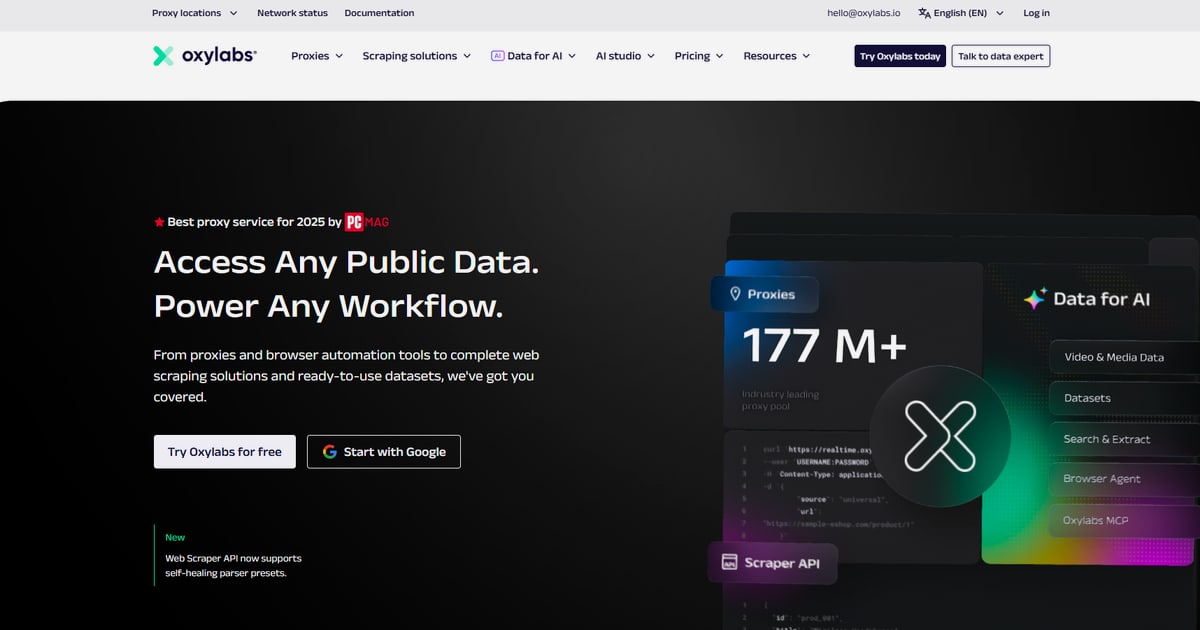
2. Oxylabs
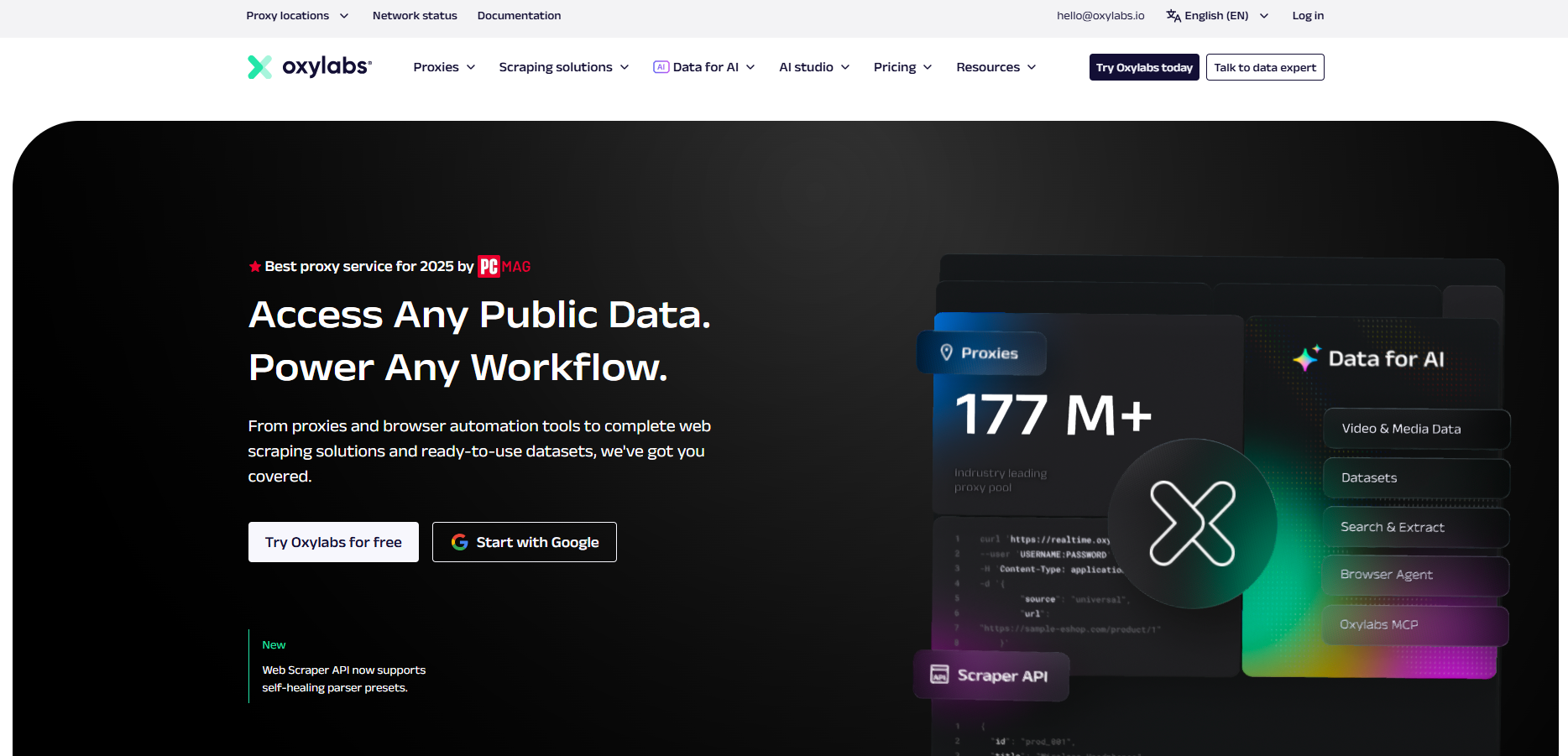
Top 10 Web Data Platform Products 2026: Ranked & Reviewed - 2. Oxylabs.
Best for: Large-scale scraping with a focus on residential proxies and e-commerce data.
Oxylabs offers a 100M+ residential proxy network and a robust scraping API with built-in CAPTCHA solving. Its Web Scraper API supports JavaScript rendering and returns structured JSON. The platform is particularly strong for e-commerce price monitoring and ad verification. Oxylabs provides detailed documentation and a free trial, though pricing is custom-quoted for enterprise volumes. According to Oxylabs' official documentation, its success rate exceeds 99% on major targets.
3. Zyte (formerly Scrapinghub)
Top 10 Web Data Platform Products 2026: Ranked & Reviewed - 3. Zyte (formerly Scrapinghub).
Best for: Developers who want a managed scraping API with automatic extraction.
Zyte's Automatic Extraction API uses AI to identify and extract product, article, and job posting data without writing site-specific parsers. It handles proxy management, retries, and bans. Zyte is built on Scrapy, the popular open-source framework, giving it a strong developer community. Pricing is based on successful requests, with a free tier for testing. Zyte's official benchmarks show high accuracy on complex sites.
4. ScrapingBee
Best for: Startups and small teams needing a simple, affordable scraping API.
ScrapingBee provides a straightforward API that handles headless browser rendering, proxy rotation, and CAPTCHA solving. It supports JavaScript-heavy sites and returns HTML or JSON. The pricing is credit-based with a generous free tier (1,000 credits). While its proxy network is smaller than Bright Data's, ScrapingBee is praised for its ease of use and responsive support. Independent reviews on G2 highlight its reliability for moderate-scale projects.
5. Apify
Best for: Teams that want a full platform for building, deploying, and monitoring scrapers.
Apify offers a cloud platform where developers can run pre-built scrapers (called Actors) or write their own using JavaScript or Python. It includes proxy management, scheduling, and data storage. Apify's store has hundreds of ready-made scrapers for popular sites like Google Maps, Amazon, and Twitter. Pricing is usage-based, with a free tier. Apify is a strong choice for those who need custom scraping logic without managing infrastructure. See Apify's pricing page for details.
6. ScraperAPI
Best for: Developers who need a drop-in proxy and rendering API with simple pricing.
ScraperAPI handles proxy rotation, CAPTCHA solving, and JavaScript rendering via a single API endpoint. It offers a free tier of 5,000 requests and straightforward credit-based pricing. The platform is known for its reliability and ease of integration, with libraries for Python, Node.js, and PHP. However, it lacks the advanced data extraction features of Zyte or Bright Data. ScraperAPI is ideal for small to medium-scale scraping tasks.
7. Diffbot
Best for: Knowledge graph and structured data extraction from web pages.
Diffbot uses computer vision and AI to automatically extract entities, relationships, and facts from web pages, building a knowledge graph. Its APIs can analyze articles, products, and discussions. Diffbot is less about raw scraping and more about turning unstructured web content into structured data for AI and analytics. Pricing is custom, and it's best suited for enterprises with specific knowledge graph needs. Diffbot's official site details its capabilities.
8. SerpApi
Best for: SEO professionals and developers needing real-time search engine results.
SerpApi provides a simple API to scrape Google, Bing, Baidu, and other search engines, returning structured JSON with organic results, ads, and featured snippets. It handles proxy rotation and CAPTCHA solving. Pricing is based on searches, with a free tier of 100 searches per month. SerpApi is widely used for rank tracking and SERP analysis. For a broader comparison of SERP APIs, see our Top 10 Public Web Data & SERP API Platforms 2026.
9. Octoparse
Best for: Non-technical users who need a visual scraping tool with cloud execution.
Octoparse offers a point-and-click interface to build scrapers without coding. It includes cloud-based extraction, IP rotation, and scheduling. While not as developer-friendly as API-first platforms, Octoparse is popular among marketers and analysts for quick data collection. It has a free plan and paid tiers starting at $75/month. Octoparse's official website provides templates for common sites.
10. ParseHub
Best for: Small projects and prototyping with a visual scraper.
ParseHub is a visual scraping tool that handles JavaScript, AJAX, and infinite scroll. It offers a free tier and paid plans for more pages. While it lacks the scale of enterprise platforms, ParseHub is a good entry point for those new to web scraping. It can export data to CSV, Excel, or JSON. ParseHub's documentation covers advanced tutorials.
Comparison Table
| Platform | Proxy Network | Scraping API | Structured Data | Pricing Model | Free Tier |
|---|---|---|---|---|---|
| Bright Data | 400M+ IPs | Yes | Yes | Pay-per-success | Yes |
| Oxylabs | 100M+ IPs | Yes | Yes | Custom | Trial |
| Zyte | 50M+ IPs | Yes | Yes | Pay-per-success | Yes |
| ScrapingBee | 20M+ IPs | Yes | JSON | Credit-based | 1,000 credits |
| Apify | 10M+ IPs | Yes | Custom | Usage-based | Yes |
| ScraperAPI | 40M+ IPs | Yes | HTML/JSON | Credit-based | 5,000 requests |
| Diffbot | N/A | Yes | Knowledge graph | Custom | No |
| SerpApi | N/A | Yes | JSON | Per search | 100 searches |
| Octoparse | 10M+ IPs | Visual | CSV/Excel | Subscription | Yes |
| ParseHub | N/A | Visual | CSV/JSON | Subscription | Yes |
How to Choose the Right Web Data Platform
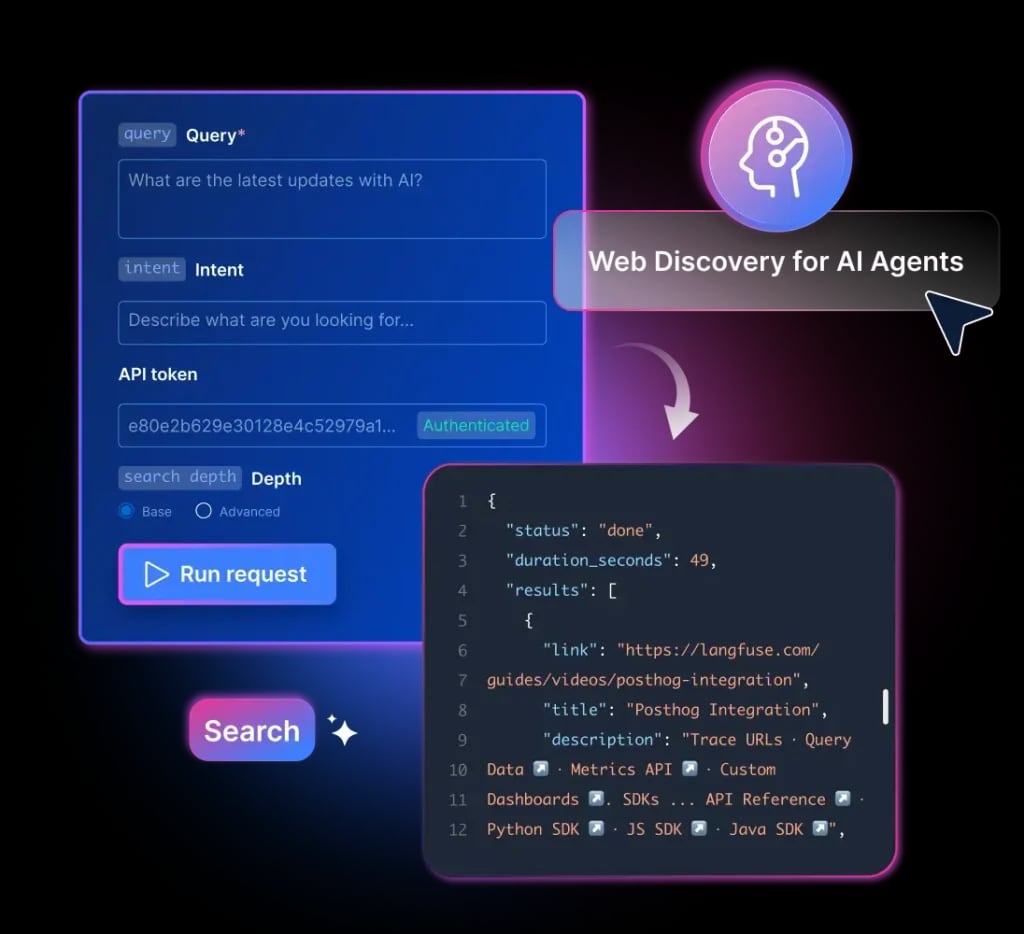
Bright Data product interface.
- For enterprise-scale AI training: Bright Data or Oxylabs offer the largest proxy networks and highest success rates.
- For developers who want managed extraction: Zyte or ScrapingBee provide simple APIs with automatic parsing.
- For building custom scrapers: Apify gives you a full platform with scheduling and storage.
- For SEO and SERP data: SerpApi or Bright Data's SERP APIs are purpose-built.
- For non-technical users: Octoparse or ParseHub offer visual interfaces.
If your workflow requires full browser automation—such as capturing screenshots, executing JavaScript, or controlling Chrome DevTools Protocol sessions—consider pairing a web data platform with a browser API like AdsCrawl. For example, you can use AdsCrawl with Cronitor to monitor rendering failures, or compare AdsCrawl vs Scrapy for Python-based scraping. These tools are complementary, not substitutes.
Related reading
- Puppeteer Review 2026: Browser Automation Library Tested - Hands-on Puppeteer review: headless Chrome and Firefox automation, setup, scraping, PDF generation, limitations, and who should use it in 2026.
Sources and further reading
- Top 10 data warehouse platforms for 2026: A checklist for tech leads - Compare the top 10 cloud data warehouse platforms for 2026. This complete tech lead's checklist evaluates TCO, real-time analytics, and modern architectures.
- 10 best AI data platforms in 2026 - The 10 best AI data platforms in 2026, ranked by AI capability, cost, and time to value: Kleene.ai, Databricks, Snowflake, Fivetran + dbt and more.
- 10 Best Data Integration Platforms in 2026 (Compared) - Domo - Mar 25, 2026 ... If your organization is deeply invested in a specific cloud ecosystem (Amazon Web Services (AWS), Azure, or Google Cloud Platform (GCP)), ...
Frequently Asked Questions
What is a web data platform?
A web data platform provides infrastructure and APIs to collect, extract, and structure data from public websites at scale. It typically includes proxy networks, scraping APIs, CAPTCHA solving, and data delivery mechanisms.
Which web data platform is best for AI training data?
Bright Data and Diffbot are strong choices. Bright Data offers petabyte-scale datasets and SERP APIs, while Diffbot builds knowledge graphs from web content.
Are web data platforms legal?
Reputable platforms comply with data protection laws and only collect publicly available data. Always review terms of service and consult legal counsel for your specific use case.
How much do web data platforms cost?
Pricing varies widely. Entry-level plans start around $50/month, while enterprise contracts can exceed $10,000/month. Many offer free tiers or trials.
Can I use multiple web data platforms together?
Yes. Many teams combine a proxy network with a scraping API and a browser automation tool for different tasks. For example, you might use Bright Data for proxies and AdsCrawl for browser rendering checks.
Conclusion
The web data platform market in 2026 is mature, with clear leaders for different needs. Bright Data dominates enterprise-scale collection, while Zyte and ScrapingBee excel for developers, and Octoparse and ParseHub serve non-technical users. Evaluate your volume, technical resources, and compliance requirements to choose the right platform. For adjacent browser automation needs, tools like AdsCrawl can fill gaps in rendering and interaction, ensuring your data pipeline captures the full picture.